🔎 How to solve perfect competition problems (three steps)
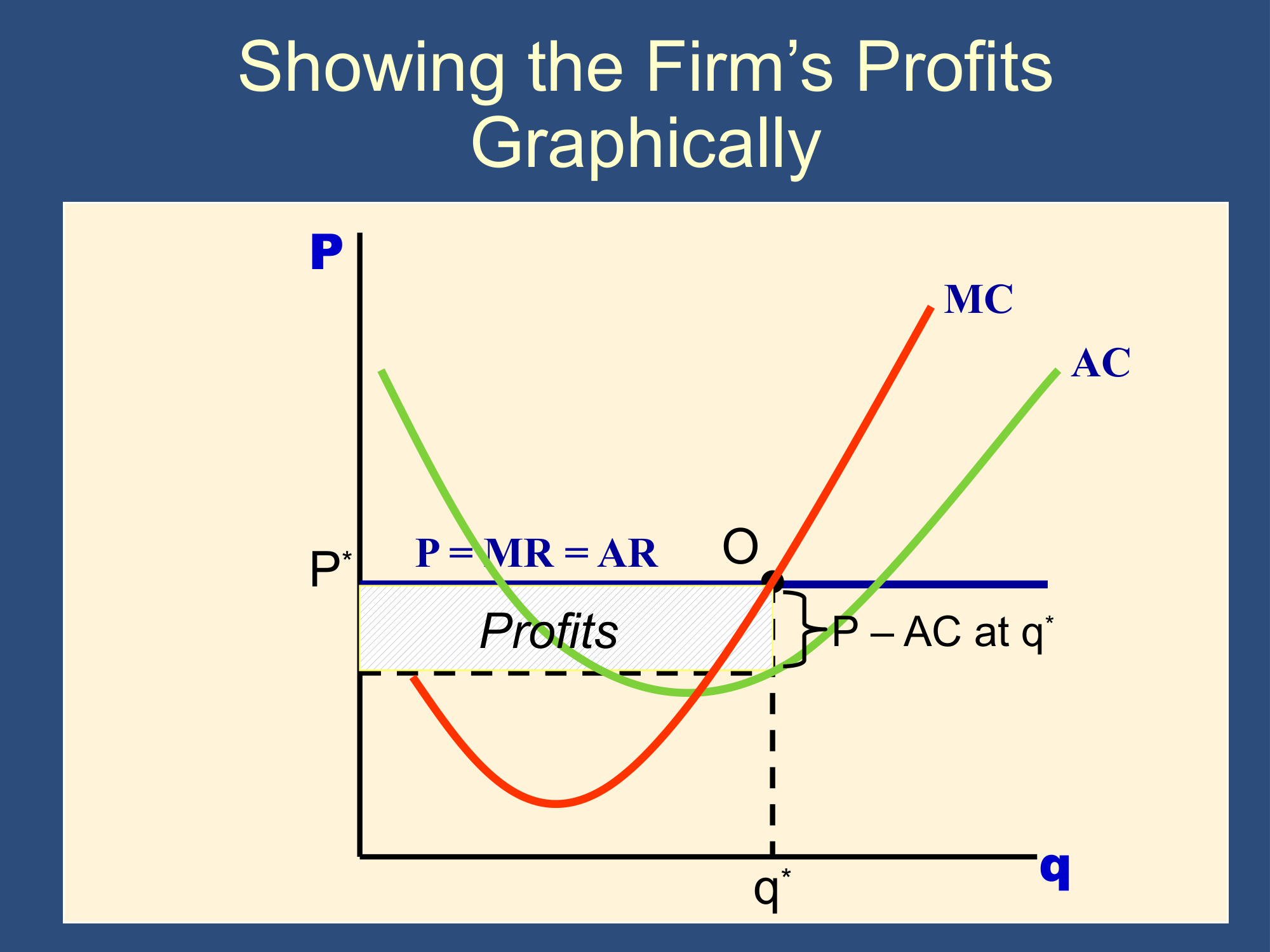
On the homework/exam, you often solve a perfect competition problem in three steps:
-
Use to find . (or for discrete goods)
-
Shut down if when you produce .
-
if you shut down, then
-
if you don’t shut down, then .
-
-
Complete rest of problem.
Here are the same three steps, broken down with explanations:
-
Find the optimal quantity to produce if you don’t want to shut down, : Use to find . (or for discrete goods)
- This step anchors everything that comes later, because, if they produce anything, they produce units.
-
Will you make units or will you shut down? Shut down if . ← use the AVC for when you produce .
-
if you shut down, then
-
if you don’t shut down, then .
-
-
Once you know q, you can plug q into any equation that you like. For example:
🧭 ↑↑ we will follow similar steps with monopolies and monopolistic competition as well. For all models, we will determine quantity by setting . Perfect competition is special only in that in perfect competition, so we can set .
Feedback? Email munger.e1010@gmail.com 📧. Be sure to mention the page you are responding to.