Skip to content

🧭 What is a "bite sized" multiple choice question?

I expect the exam to be 100% β€œbite-sized” multiple choice questions that test critical thinking. With a β€œbite sized” question,

  • The prompt is typically 1-4 sentences long. It may also contain a diagram or a table.
  • Each possible answer typically has 1-2 sentences, but could contain a diagram.

The best indication of what an exam question is likely to be are bite-sized multiple choice questions from the problem sets. Here are some: (please don’t rely on this too heavily; you should be able to do any sort of problem that someone who has carefully studied the lectures and problems set would be able to do)
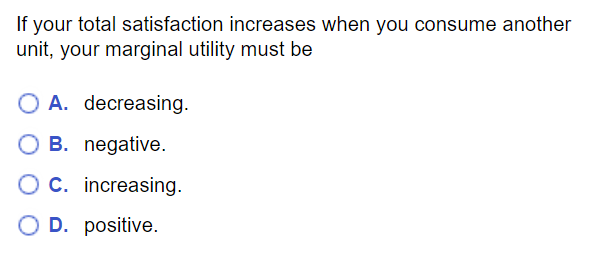
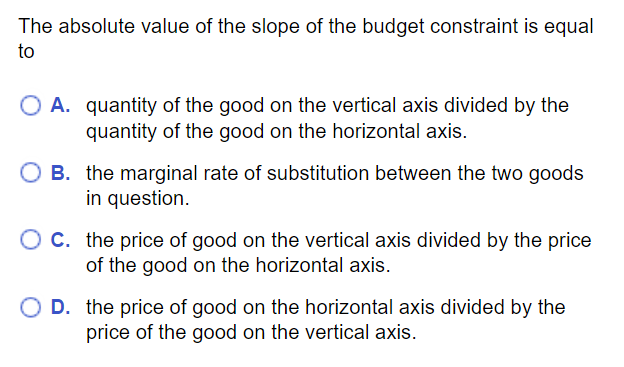
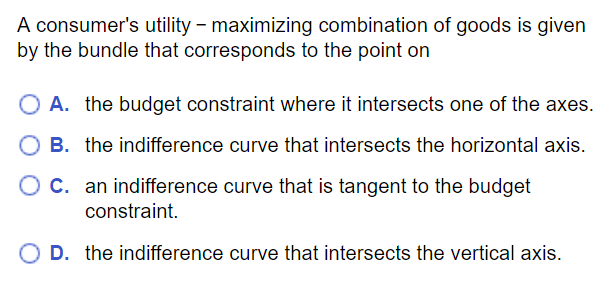
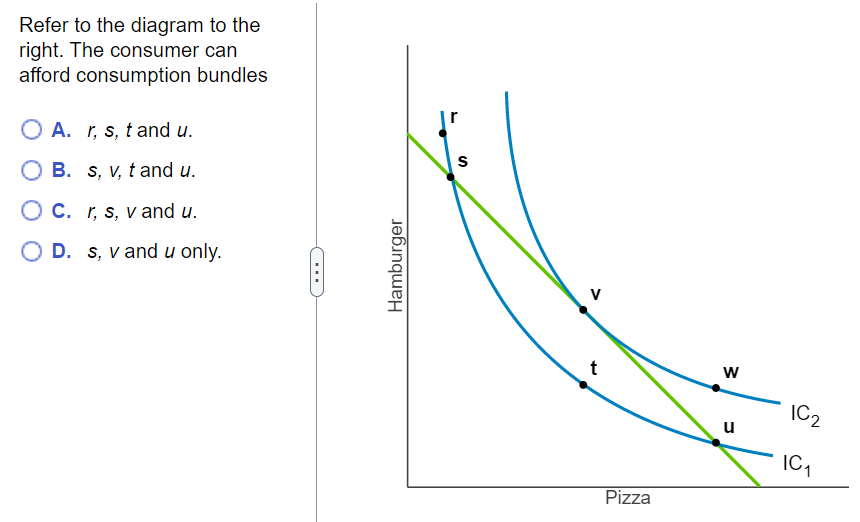
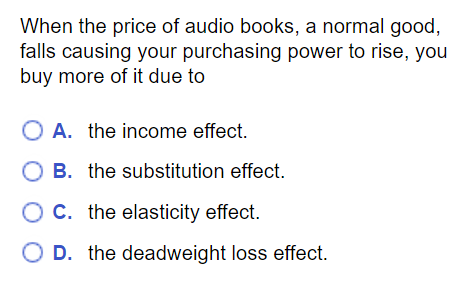
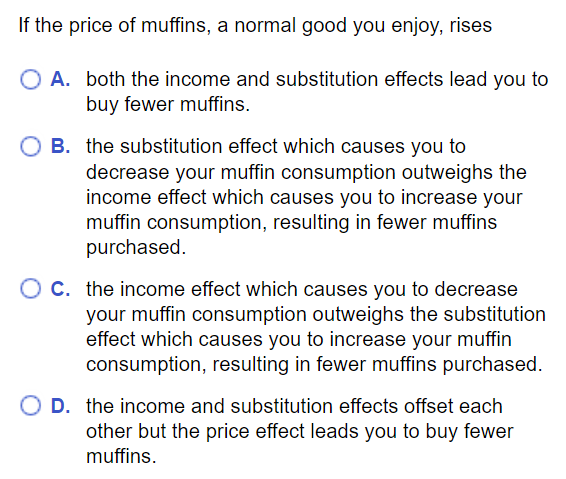
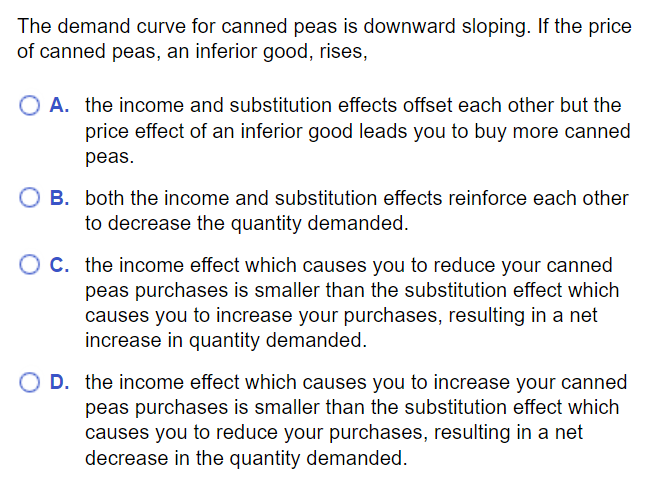
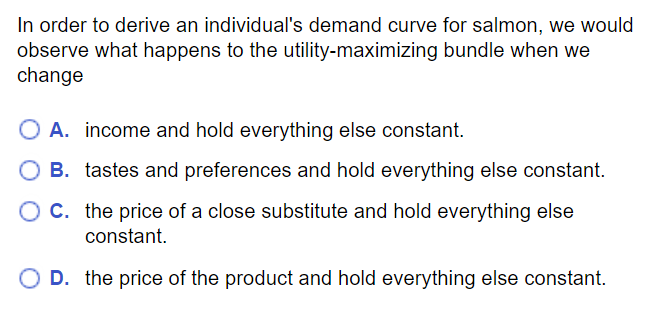
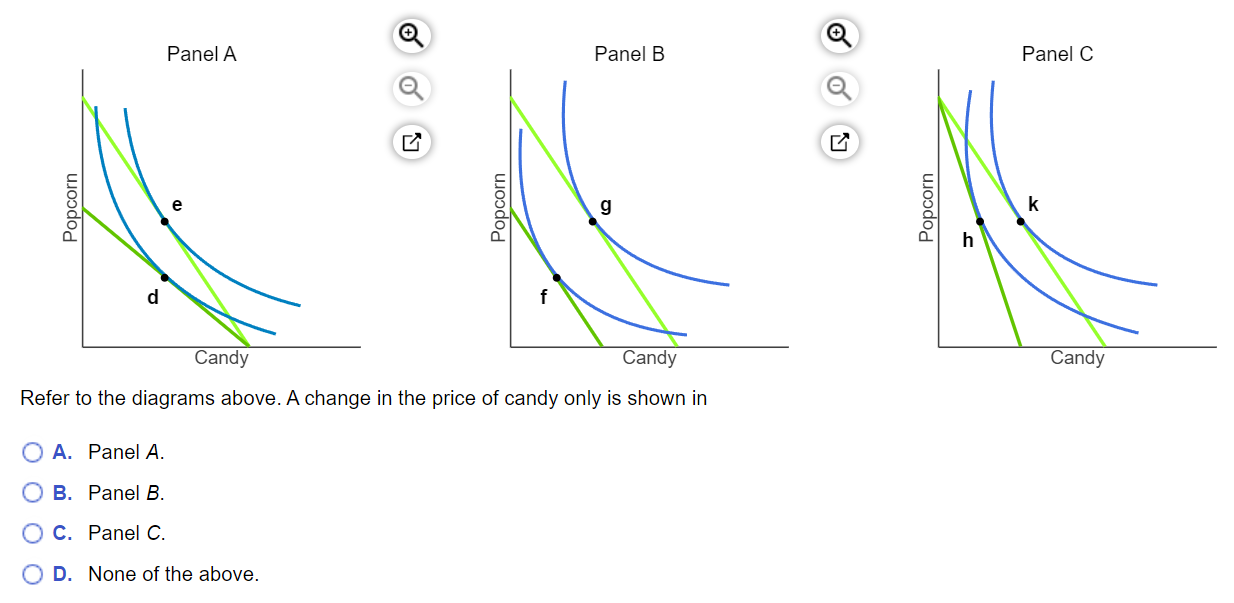
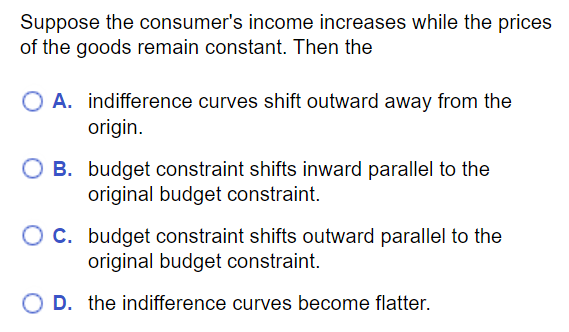
MC question: If total satisfaction increases when you consume another unit, marginal utility must be positive MC question: Absolute value of slope of budget constraint equals price of horizontal axis good divided by price of vertical axis good MC question: Utility-maximizing bundle is where indifference curve is tangent to budget constraint MC question with diagram: Which consumption bundles can the consumer afford, showing budget constraint and indifference curves for Pizza and Hamburger MC question: When price of audio books falls causing purchasing power to rise, you buy more due to the income effect MC question: If price of muffins, a normal good, rises, both income and substitution effects lead you to buy fewer MC question: If price of canned peas, an inferior good, rises, substitution effect dominates income effect MC question: To derive individual demand curve for salmon, change the price of the product and hold everything else constant MC question with three panel diagrams: A change in the price of candy only is shown in Panel C, with Popcorn vs Candy axes MC question: If consumer income increases while prices stay constant, budget constraint shifts outward parallel to the original