🔎 E-1000 Move Along vs. Shift the Curve (ie Demand vs QD)
A simple rule
Section titled “A simple rule”When price is the only thing that changes, then:
- it is a change in QUANTITY demanded
- you move up and down on the same curve (like the diagrams on the right) When any other factor changes, then:
- it is a change in demand
- the entire curve shifts to the left or the right.
The above rule always applies. It works the same whether you are talking about demand or supply. It also works the same whether something is “increasing” or “decreasing”.
Practice
Section titled “Practice” A social media influencer says that crocs are great
increase in demand because of change to tastes and preferences, which is a non-price determinant of demand.
The price of propane rises, so people buy less propane decrease in quantity demanded
The price of propane rises, so firms produce more propane increase in quantity supplied
When jet fuel prices rise, how does that affect the market for air travel (ie plane tickets)? Don’t worry about other prices changing besides jet fuel. decrease in supply because jet fuel is an input that a firm uses when providing air travel. Input prices are a non-price determinant of supply, so this will shift the curve left.
The government makes it illegal to sell bananas at the current price of $.89 per pound. Going forward, all bananas must be sold for at least $1 per pound. As a result, the price rises from $.89 to $1 and firms supply more bananas
only the price changed - no non-price determinants of demand changed. Therefore, this is a movement along the curve.
Demand
Section titled “Demand”INCREASE IN QUANTITY DEMANDED … results from a change in price | INCREASE IN DEMAND … results from a change in a non-price determinant of demand |
|---|---|
| Movement along curve | Shift in the curve |
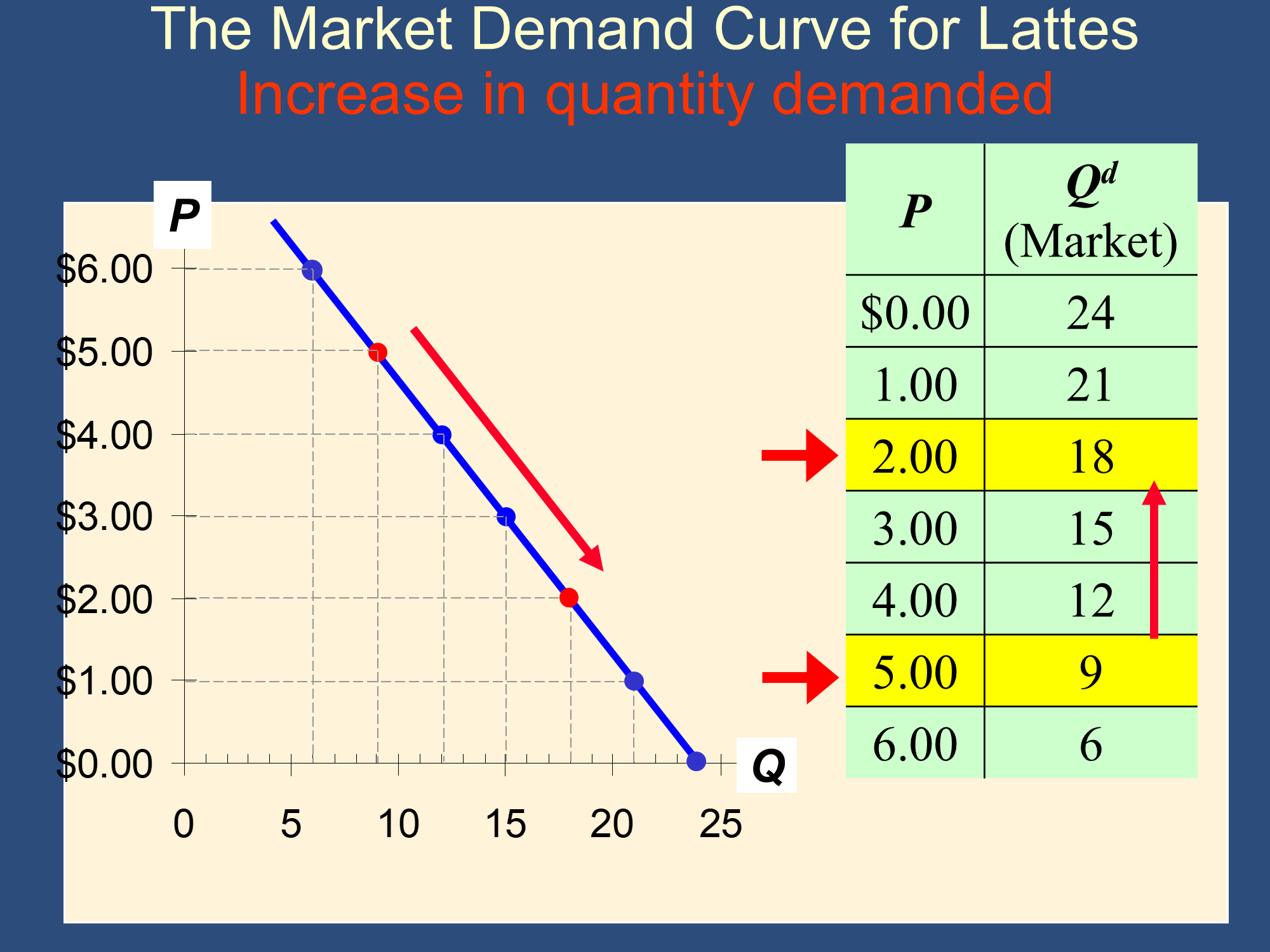 | 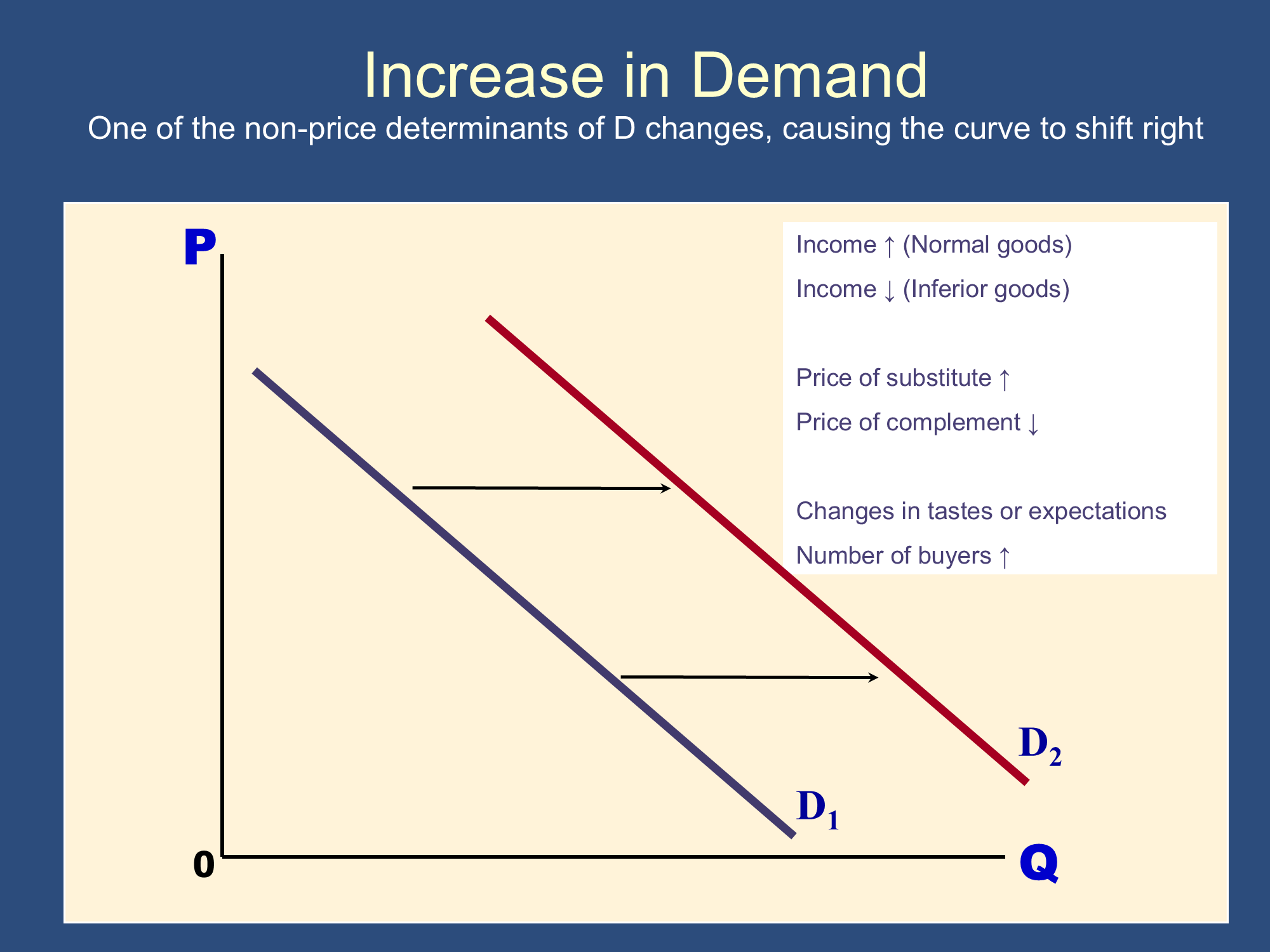 |
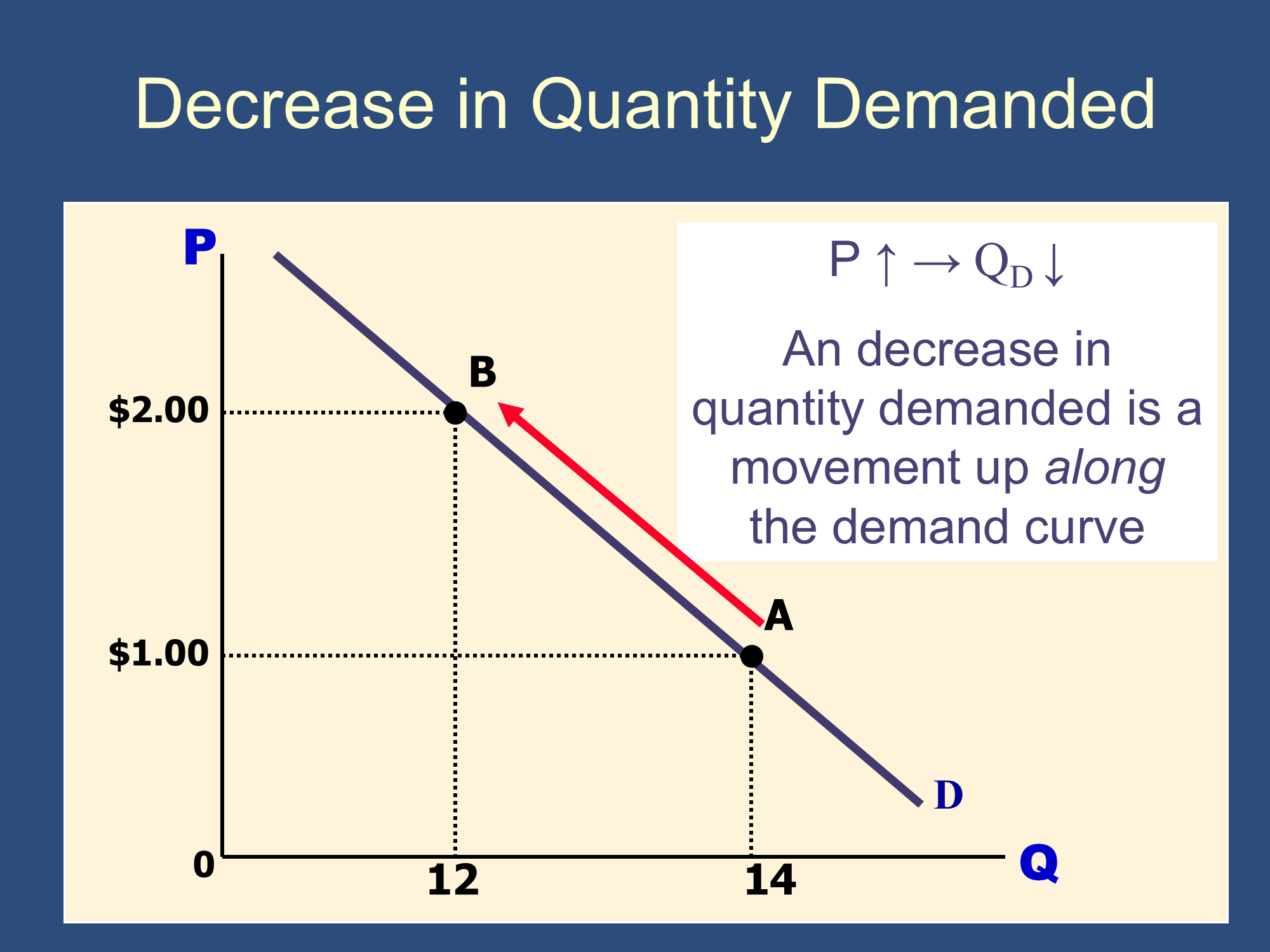 | 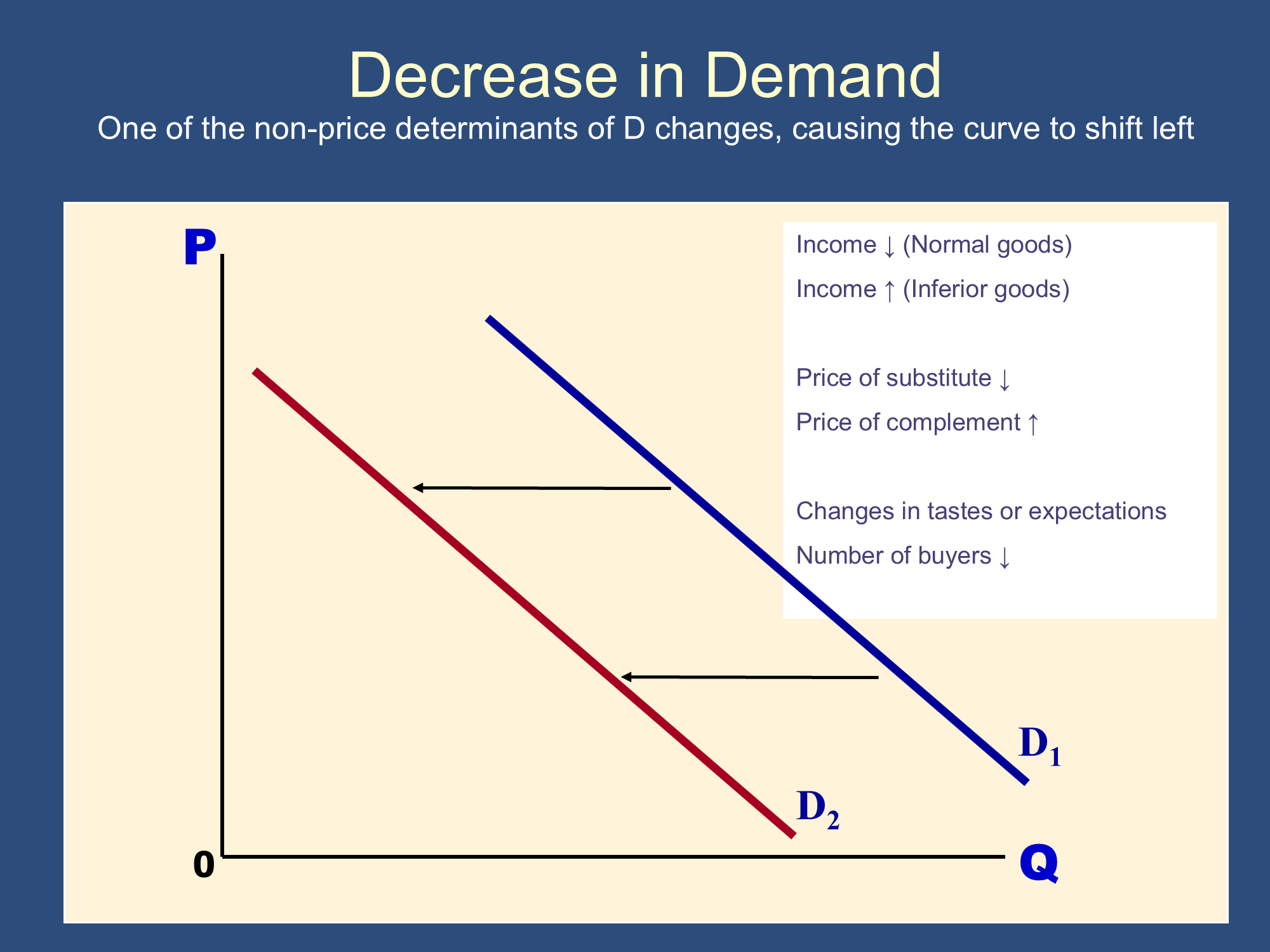 |
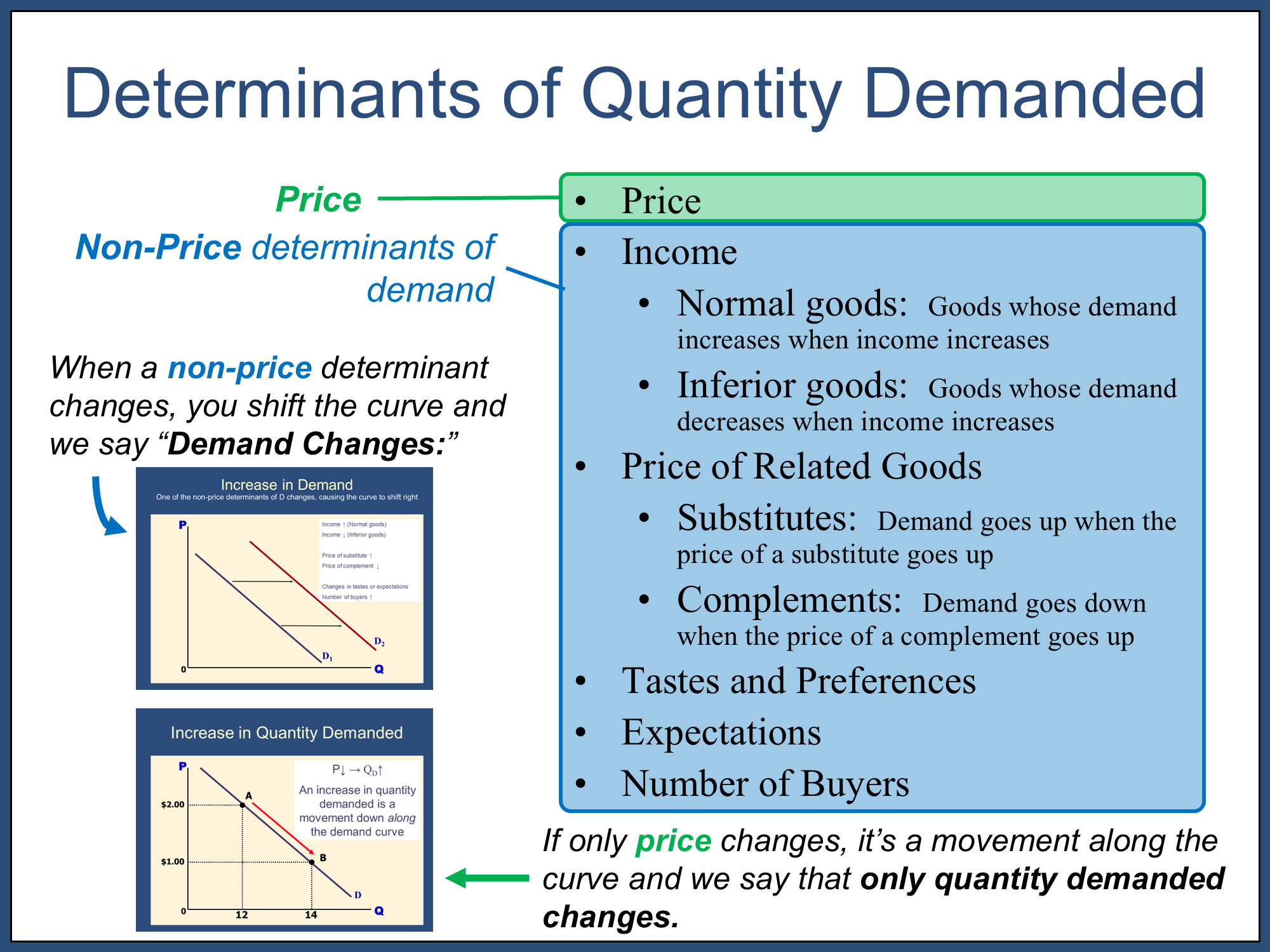
Changes to non price determinants of demand result in shifts in the demand curve rather than movement along the curve.
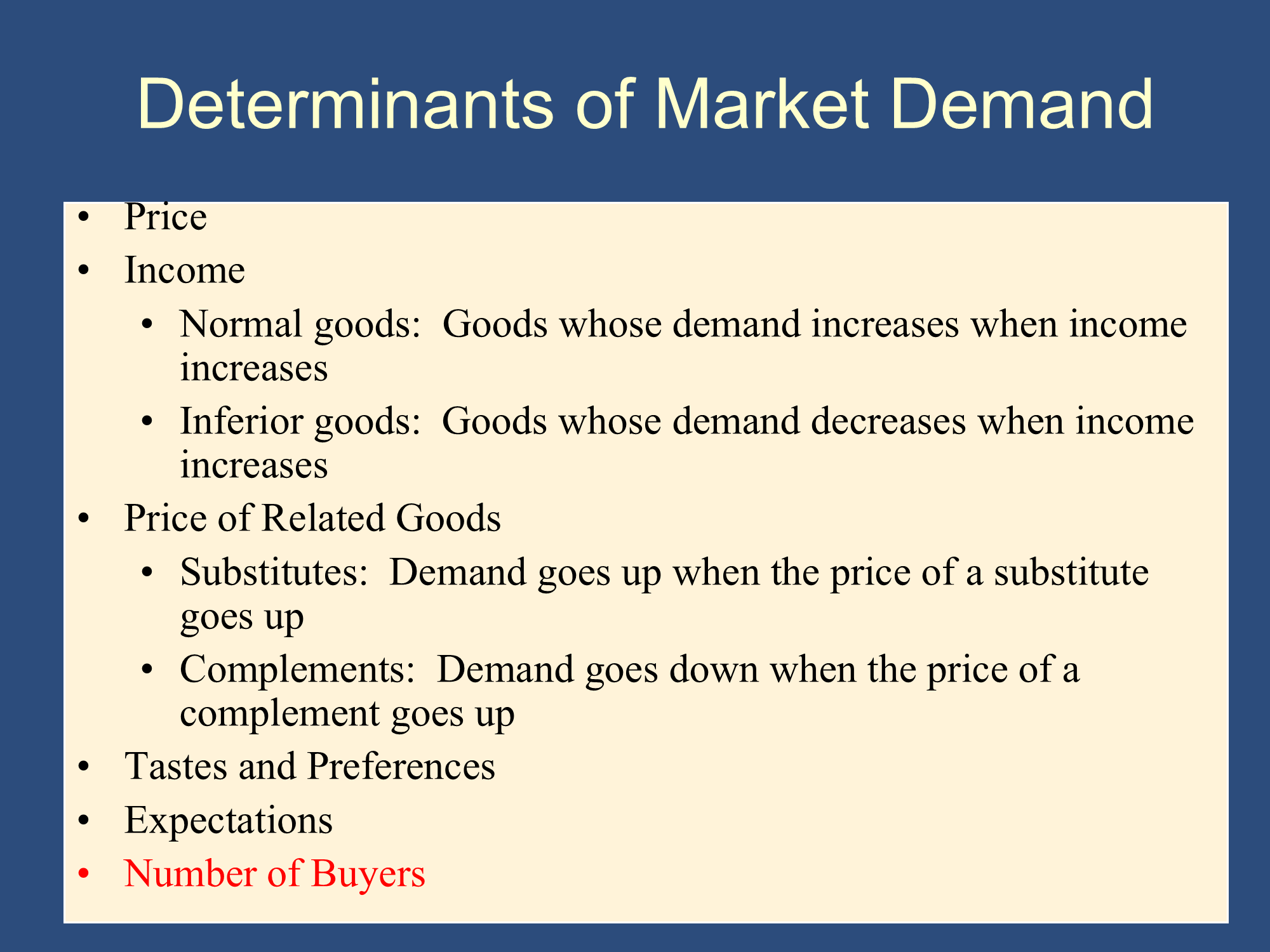
Summary:
Supply
Section titled “Supply”INCREASE IN QUANTITY SUPPLIED … results from a change in price | INCREASE IN SUPPLY … results from a change in a non-price determinant of supply |
|---|---|
| Movement along curve | Shift in the curve |
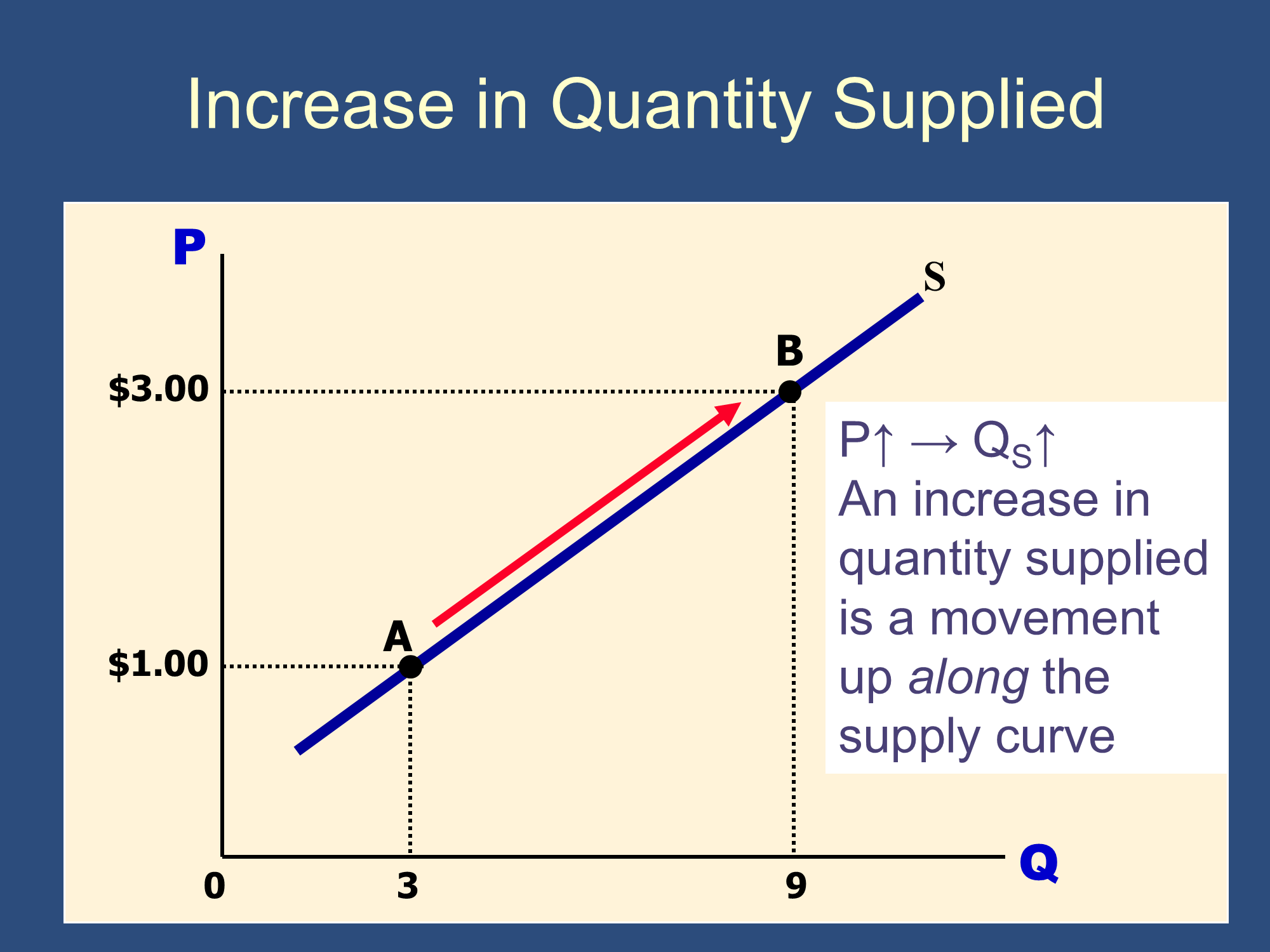 If you are on the same curve, it is movement along the curve. | 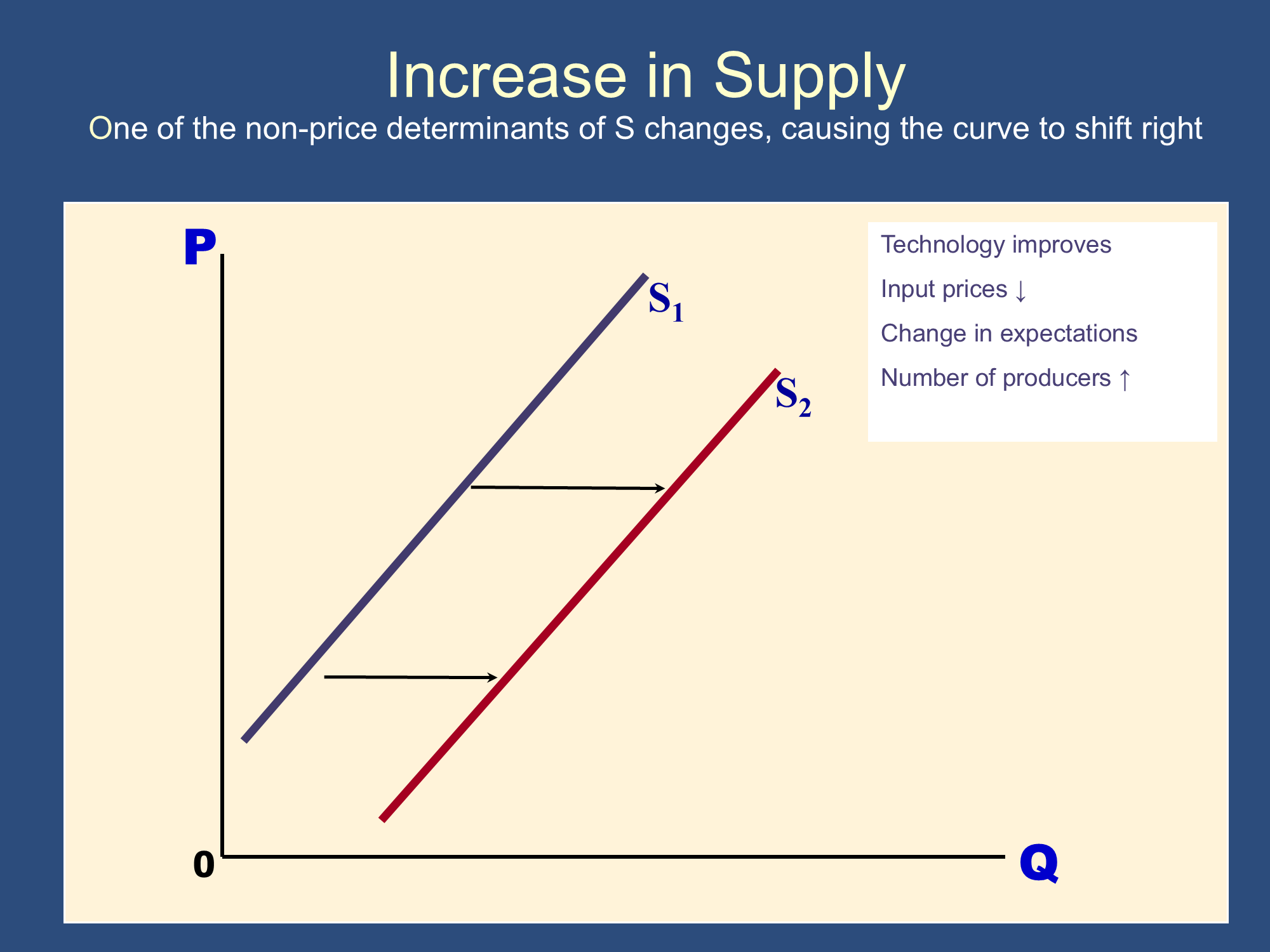 If there are two curves, it is shift in the curve. |
|
|
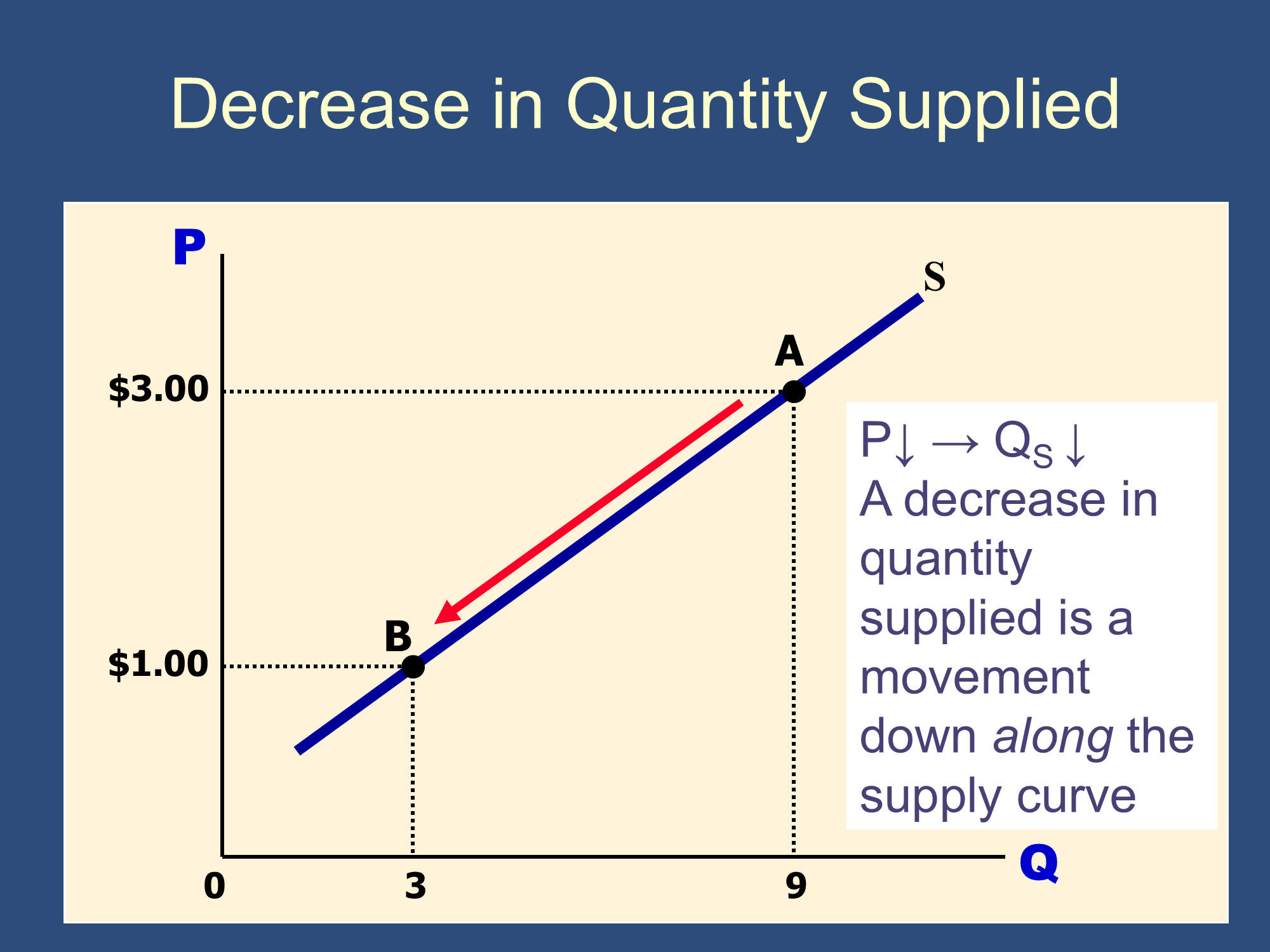
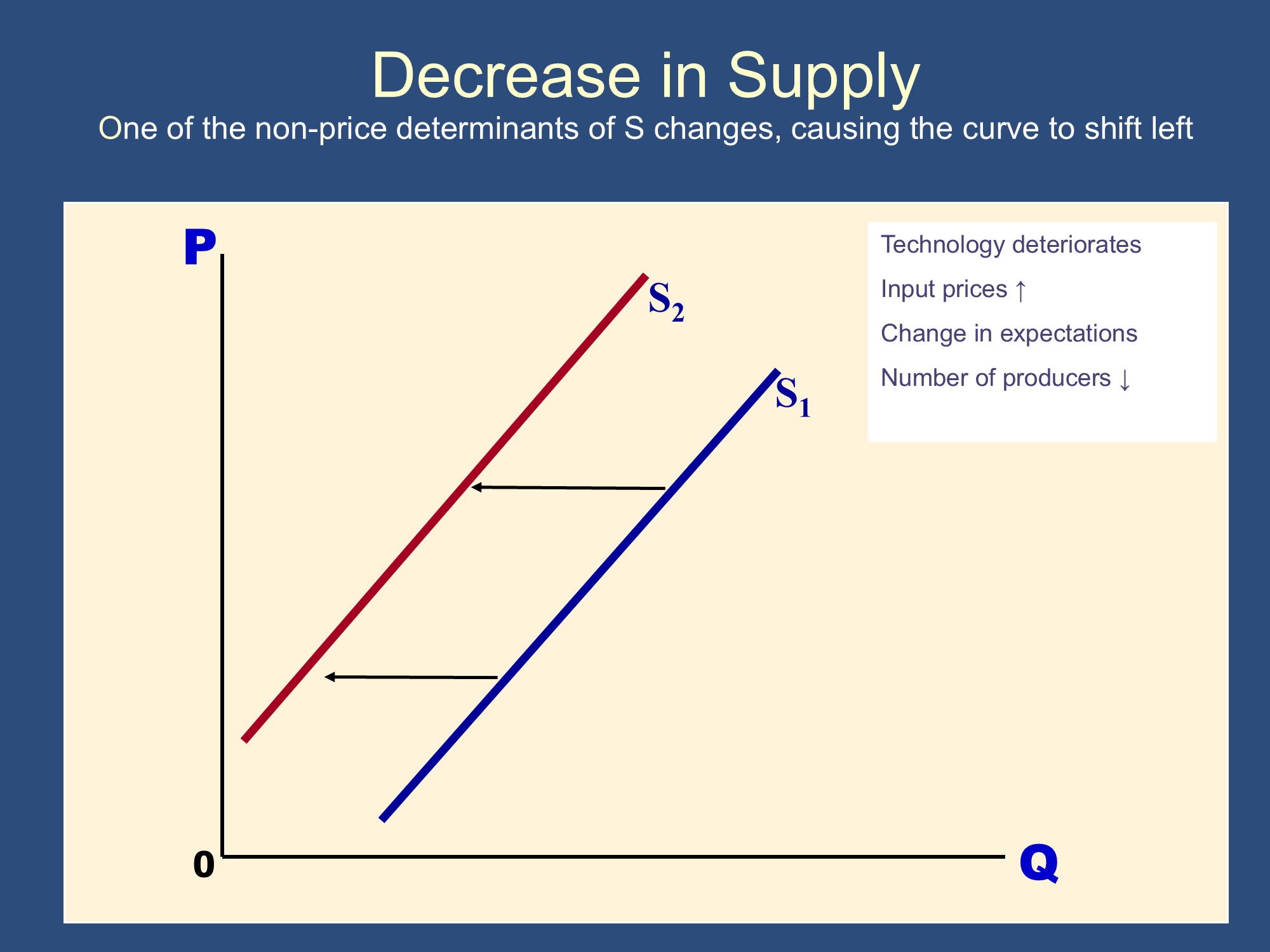
Changes to non price determinants of supply result in shifts in the supply curve rather than movement along the curve.
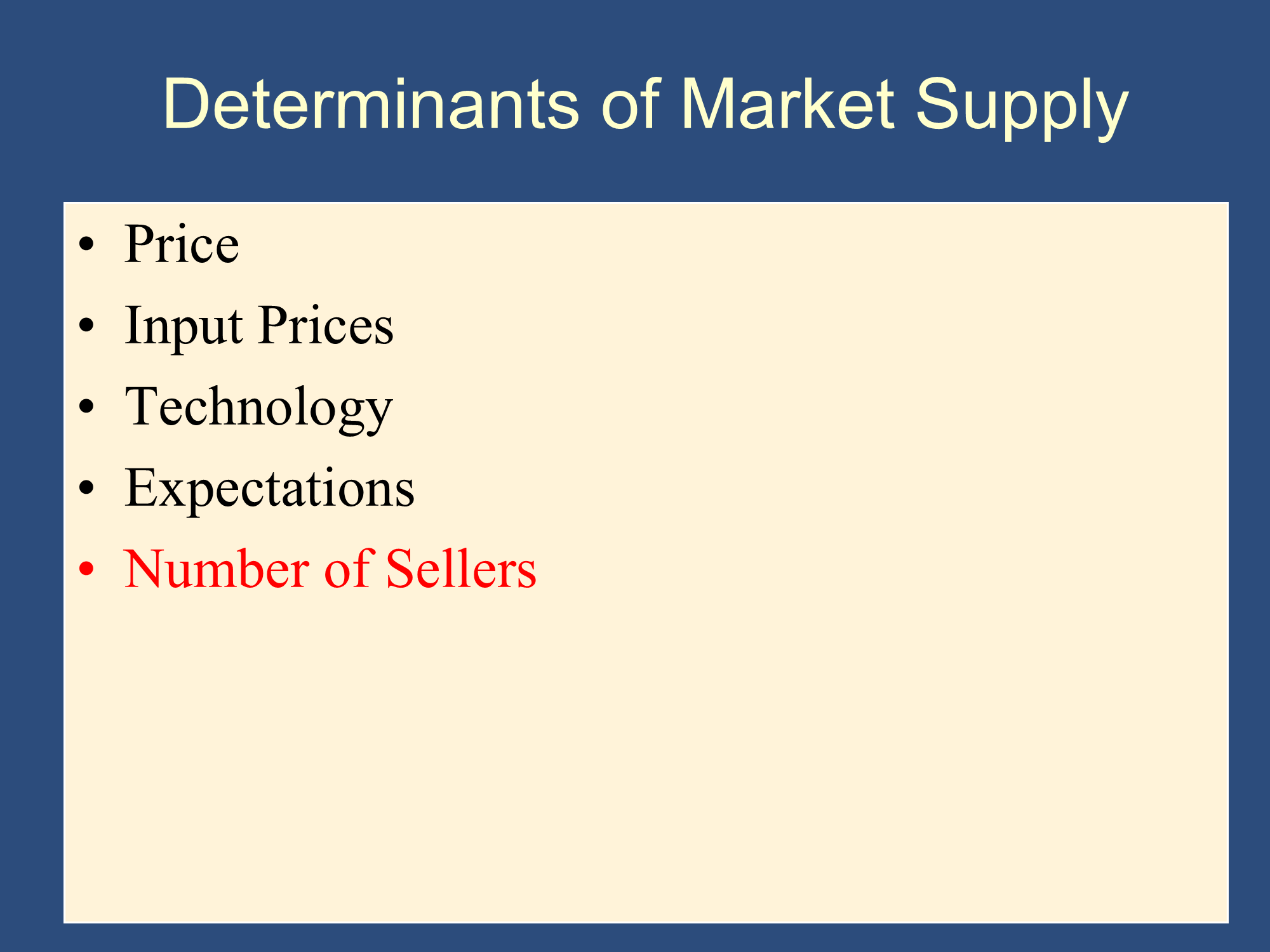
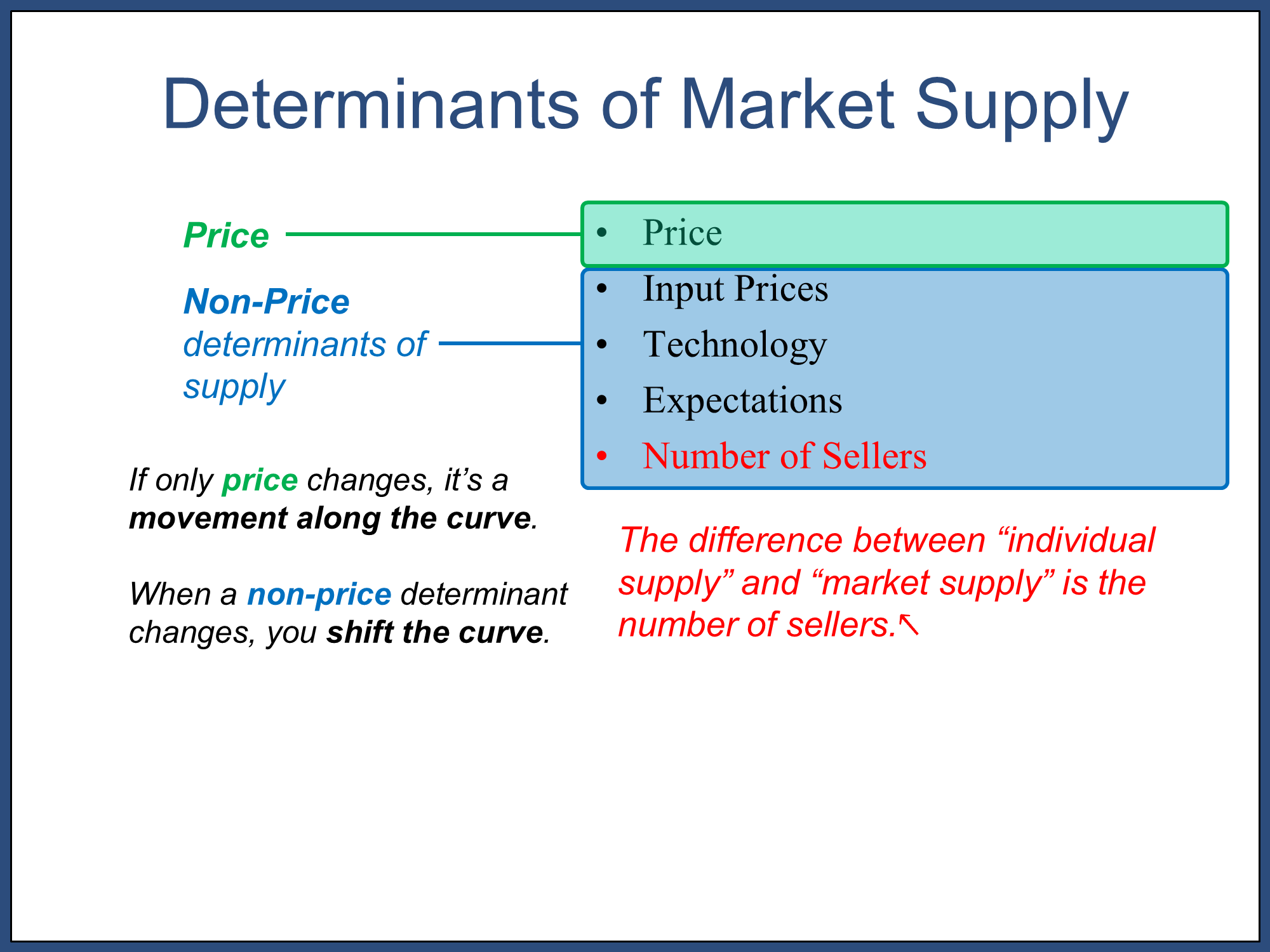
Summary:
Feedback? Email munger.e1010@gmail.com 📧. Be sure to mention the page you are responding to.