🙋 Student Q&A (Lecture 6)
Click here to learn about timestamps and my process for answering questions. Section agendas can be found here. Email office hour questions to munger.e1010@gmail.com. PS1Q2=“Question 2 of Problem Set 1”

📅 Questions covered Thursday, Mar 26
Section titled “📅 Questions covered , Mar 26”🕣 9:03pm
❔ I liked that diagram! Please share
✔
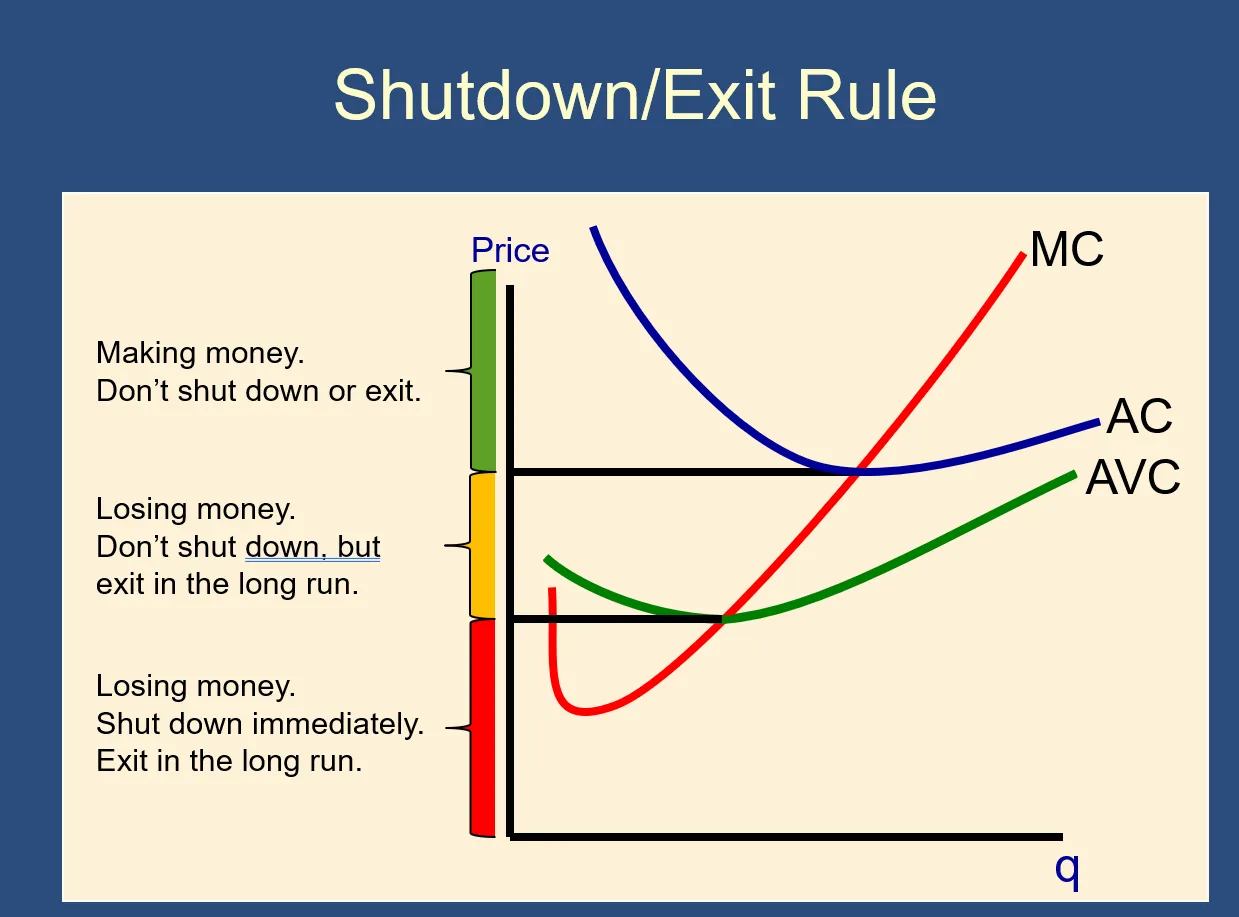
🕣 9:56pm
❔ Thank you again for sharing your knowledge with the class by reviewing the midterm questions. While I took the time to review it, I had a few questions below, based on their respective problem numbers:
- Couldn’t we simply infer that Blanca is risk averse because she prefers CE over EV, even without the calculations?
✔ We’d love to do that. What makes this problem hard is that we don’t know the CE.
We do know an amount that Blanca would receive with certainty, but we don’t know that Blanca is indifferent between that amount and the gamble.
The CE is an amount that Blanca would ⓐ receive with certainty, and ⓑ she is indifferent between that amount and the gamble.
Let’s review the prompt: “Blanca prefers a certain income of $20,000 to a gamble with a 0.5 probability of $10,000 and a 0.5 probability of $30,000.”
Blanca has a choice:
- Option 1: $20,000 guaranteed
- Option 2: A gamble with 50% → $10,000 and 50% → $30,000
Because she prefers Option 1 to Option 2, the CE of option 2 must be less than $20,000.
In this case, the income of $20,000 is certain, but she is not indifferent between it and the gamble. In fact, we specifically know that she prefers $20,000 to the gamble. Therefore, we don’t know what the CE is.
However, we do know that the CE must be lower than $20,000. This is under the assumption that more certain money makes her more satisfied and less certain money makes her less satisfied (ie, it is under the assumption that her utility function for money, , is upsloping and smooth). Under this assumption, if she prefers $20,000 to the gamble, there must be a smaller amount of money that she is indifferent between receiving (with certainty) and the gamble. Whatever that number is, it is the CE.
Because we know that this CE is less than $20,000 and because the EV is less than $20,000, we know CE<EV.
The bottom line is that your conclusion is correct. It’s just that it does require a very complicated chain of reasoning to know why the certainty equivalent must be less than $20,000.
🕣 10:11pm
❔ Could you help explain what it means to be at economic profit at zero? Specifically, Prof Watson said the following : economic profit at zero means the firm is making the same accounting profits in this industry than they could at any other industry.
I must admit I am having a hard time wrapping my head around the part related to any other industry. I understand economic profit at zero means no incentive for firms to leave or enter the market and zero economic profit means there is still a positive accounting profit.
✔ See video
🕣 10:15pm
❔ This is an interpretation question regarding problem set 5, question 8.
At this level of output, profit will be ___$.(Enter your response rounded to the nearest dollar.)
Are we being asked the total profit or being asked profit per box of apples?
The question is not clear in what it’s asking for.
✔ Total Profit.
📅 Questions covered Sunday, Mar 29
Section titled “📅 Questions covered , Mar 29”🕣 7:42pm
❔ Explain firm’s supply curve. What is relationship between supply curve and the firm’s cost?
✔
🕣 8:00pm
❔ https://1010.robmunger.com/l6/formulaexample/
✔
🕣 8:03pm
❔ https://1010.robmunger.com/l6/6notes/#algebraic-example-with-the-3-steps
✔
Feedback? Email munger.e1010@gmail.com 📧. Be sure to mention the page you are responding to.