🔎 What sort of incentive schemes help overcome principle-agent problems?
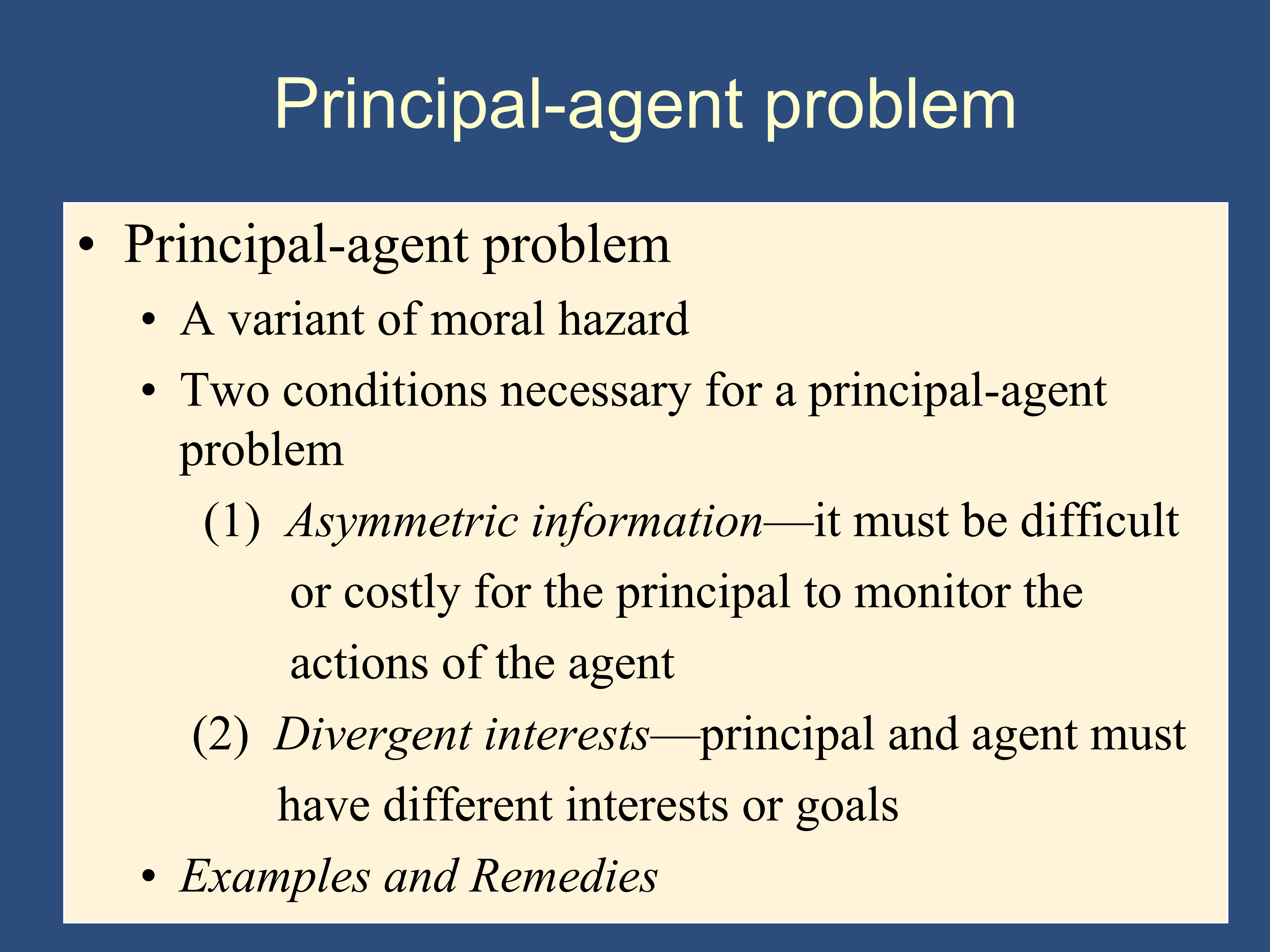
Looking at the definition of Principal-agent problems, there are two necessary conditions: Asymmetric information and Divergent Interests.
Good incentive schemes are schemes that respond to the problem of divergent interests.
For example, stock options or executive stock compensation programs are designed to align the interests of management with the interests of stock holders.
Interests of Management:
- They want to do what they are hired to do: to build shareholder value
- Relax.
Interest of Shareholders:
-
They want the management to do what it was hired to do: to build shareholder value
-
see #1.
Clearly, we have a divergent interest. The CEO cares about the CEO’s work-life balance far more than the shareholders do.
A good compensation program aligns the interests of the agent with the interest of the principal. In this case, it aligns the interest of the CEO with the interests of the shareholder, because both want to increase the share price.
Does it do that well? That’s unclear. However, they definitely are designed to create strong incentives for CEOs to work very hard to boost the share price. Insofar as investors may care about a share price.
In general, anything that aligns compensation with performance is great, because it gives a financial incentive to increase the performance (individual performance, performance of the firm (net income or revenue targets), or performance of the stock (stock grants or stock options))
Feedback? Email munger.e1010@gmail.com 📧. Be sure to mention the page you are responding to.